


How Local Businesses Can Navigate Rising Costs and Changing Markets
March 23, 2026
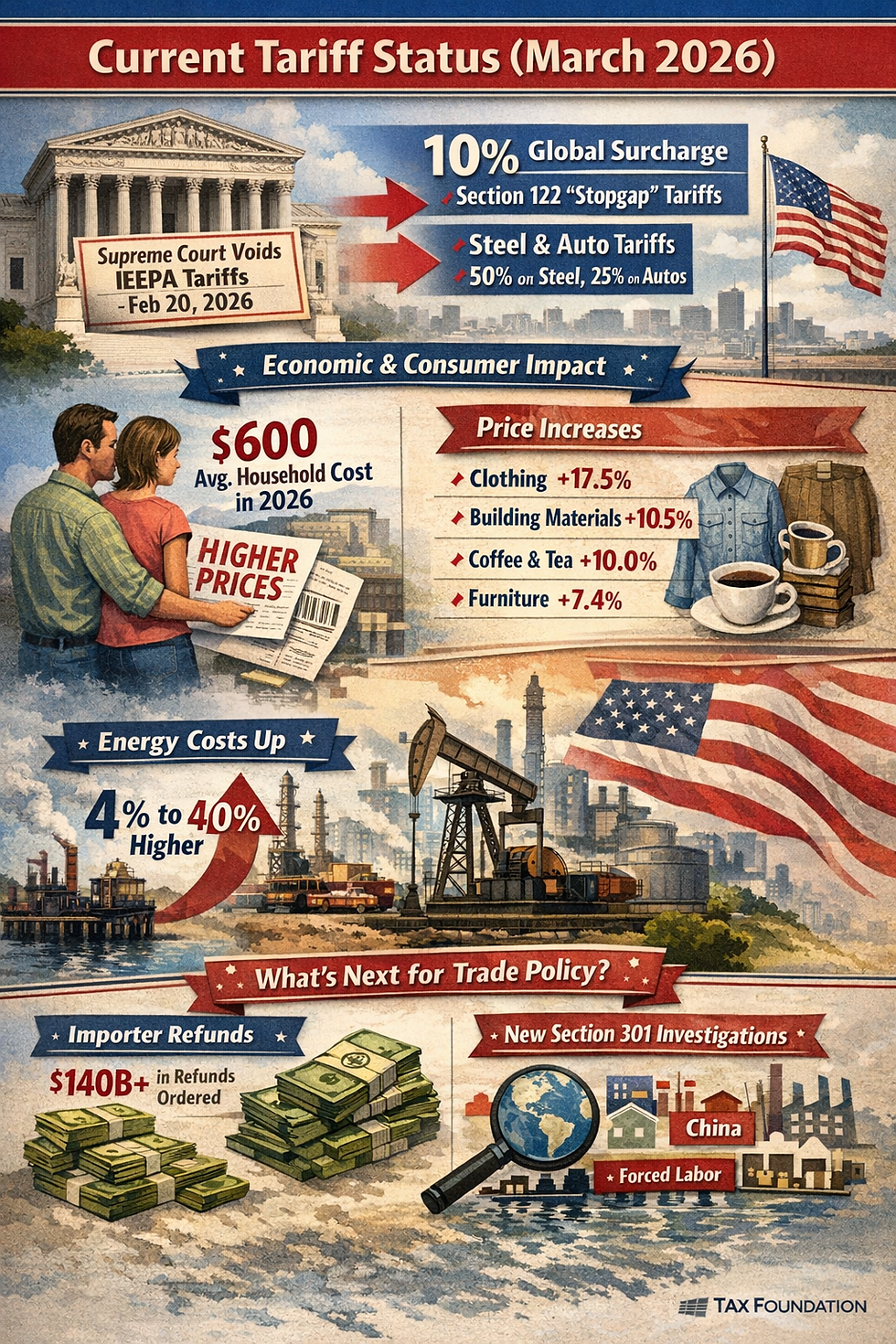
Local businesses are no strangers to change, but right now, the pace and complexity feel different. With recent shifts in U.S. trade policy, including the rollback of prior tariffs and the introduction of temporary surcharges, the ripple effects are already showing up on shelves, invoices, and customer decisions. Prices are moving. Costs are tightening. And for many, the margin for error is smaller than it has been in years.
This is not the time to operate on instinct alone. It is a time to stay informed, ask better questions, and make deliberate choices.
Across industries, the impact is uneven but real. Clothing, building materials, coffee, furniture, and energy are all seeing noticeable increases. For local businesses, that translates into higher input costs, tougher pricing decisions, and more cautious customers. At the same time, households are feeling the pressure, which means spending habits are shifting. People are still buying, but they are thinking harder before they do.
That creates both a challenge and an opportunity.
Businesses that stay close to their numbers will have an advantage. Understanding where costs are rising, where flexibility exists, and where adjustments can be made is no longer optional. It is the foundation for staying afloat. This might mean renegotiating with suppliers, adjusting product mixes, or rethinking how services are packaged and delivered.
But survival is not just about cost control. It is about connection.
Customers are paying attention. They want to know who they are supporting and why. This is the moment to communicate clearly and consistently. Not with polished language or broad claims, but with honesty. If prices need to increase, explain it. If sourcing has changed, share it. Transparency builds trust, and trust keeps people coming back.
There is also room to be more creative in how businesses engage. Small shifts can make a big difference. Hosting in-store events, collaborating with neighboring businesses, offering limited-time bundles, or creating experiences that bring people together can help maintain momentum even when spending tightens. These are not large-scale campaigns. They are thoughtful, local actions that remind customers why they choose you.
Staying informed, staying flexible, and staying visible are the three levers that matter most right now.
The businesses that will move through this period successfully are not the ones waiting for stability to return. They are the ones paying attention, adjusting as conditions change, and showing up for their customers in ways that are clear, consistent, and grounded in reality.

Comments